The language of colour

The language of colour

It’s been two weeks since Clerkenwell Design Week and what a corker of an event! So many interesting panel discussions, networking events, wellness sessions and brilliant people to meet. With my passion for colour and the influence it has on brands, businesses, our lives, homes and our wellbeing, it was a delight to be surrounded by people who share my desire to understand and talk more on this topic. But before we dive in, from the sessions I joined and participated in, here’s some key stats that landed for me, I hope they resonate and spark curiosity with you too.

Did you know…

  • 77% of CEO’s use creativity to drive productivity
  • Colour increases brand recognition by 80%
  • Colour is an integral part of brand recognition
  • 62% to 90% of decision making is based on colour alone
  • Trends in colour are influenced my multiple factors from science, intuition, inspiration, social trends and customer preferences, to societal, technological, economic, cultural and political narratives
  • In 2020 there was an acceleration in the trends towards green, nature and biophilia
  • Indoor plant sales have doubled in the last 4 years
  • Milan Week 2025 revealed that the colour trend is moving towards copper (particularly in directional pieces) and butter yellow
  • Colour for workspace aesthetics trends (2026-2030) include dynamic brights, luminous blue, acidic tones, lava red, metallised colours, all-clusivity, heritage hues, refuge wellness rooms, meadowland green, and nourishing greens, transformative teal, sensorial darks, and a priority towards mental wellness

The journey of colour

In the design world, there are many stages for the journey of colour and its timeline to reaching customers in the market. From ideation where multiple factors influence and are considered in identifying a colour trend, to the innovators and early adopters who buy into the colour before it’s reached peak popularity, to the late adopters who typically buy into the colour 1.5 years post peak popularity, then the laggards who consider purchasing this colour three years post peak popularity. It’s not until it reaches this last stage, when the colour or colours have really connected to public consciousness, that a decision is made by the company about whether the colour will be maintained, go into retirement, or potentially become an all-time classic.

It’s a colours journey through all these stages, spanning 5+ years from innovator to laggard, that enables a business to discover real world outcomes, through research, workshops, seminars, commercial development, marketing and delivery – insights from all these areas along the colour’s timeline inform its life and potential end of life treatment.

Moreover, whilst a colour or trend will suit (or not suit), a brand, product, customer demographic or region, and all sectors including fashion, automotive, interiors and more have their own look books, it was fascinating to hear that so many aspects inspire the innovators and ideation of a colour, sparking imagination of the next colour trend years before it hits the market.

What is the future of colour

This is a pretty loaded question when you think about it. With the advancements of colour and AI, the demand for sustainability in colour, and the desire for design and colour beyond aesthetics – three key topics for discussion – the panel session hosted by Mix Interiors really got me thinking.

Colour & AI

AI is an interesting tool for the design industry and it was a hot topic to kick off the discussion between Harry McKinley from Mix Interiors and his panel of guest speakers Karen Haller Laura Perryman and Justine Fox. At this current time, it was felt that AI can create colour palettes, but a human will always need to give a human touch to complete the palette; but will it remain this way – the jury was out. At present, the panel felt we are only just starting to use AI with colour; however, it can make colour theory more digestible. They also went on to suggest that AI doesn’t feel, it’s not intuitive but it’s great for automation. AI can’t create a new aesthetic in or for design; it doesn’t have lived experiences or sensory perception. It doesn’t intuit or lead.

Karen Haller commented, “AI can’t imagine, it can only react”, “Colour influences how we think, feel and behave” and “Constantly changing colour trends pushes people towards short term choices.” We need to align colour with nature, nature doesn’t follow trends. She went on to say, when we “Apply colour with psychological insight to support how people think, feel and behave” we get the results we seek.

Colour & sustainability

The second topic hotly debated by the panel of experts focused on colour and sustainability. We were reminded that the colours we choose in the built environment have a huge impact on heat retention and using energy, therefore the functional aspect of colour is really important. We need natural, non-toxic colour pigments, nature positive dyes. There’s also lots of ways we can integrate waste products, weeds and other materials into dye, building colour palettes from and for local communities.

Laura talked readily about the “Right to repair”, which reminds me of the ‘make do and mend’ mentality. But it’s more than that, there’s a growing need for sustainability, for products to have a longer life span, to be able to fix and repair things, rather than have a throw away and replace mentality. We need to be able to increase longevity of products, to improve long-term investment. Colour can be adaptive and emotive, helping us connect with the climate and our environment.

Colour beyond aesthetics

The more we can understand colour, the more we can use it too support us, our wellbeing, and our lives. In addition, as we move towards colour beyond aesthetics, the panel reminded the audience that colours are circular – they come round in cycles, materials are circular – they come round in cycles, and that trends are circular – they come round in cycles.

It seems to me that everything comes in cycles, every day, week, month and year. Like nature and the seasons, our world operates and lives in natural cycles.

As mentioned earlier, the influences on colour trends are many, spanning social, societal, political, technological, cultural, economic and ancestral. Yet with all these insights and drivers, we need to be able to create nuance and personalisation – to find peoples own needs in colour, be that warmth, comfort, excitement or feeling grounded.

There is a growing trend towards personalisation – however, there’s also a need to stop looking externally for what’s right for us. Perhaps this is an invitation to go within and ask the question ‘What’s right for me?’.

It was referenced more than once that at present, due to political and economic influences, as humans we have double fatigue, so it’s more important than ever to look into how colour can support our wellbeing.
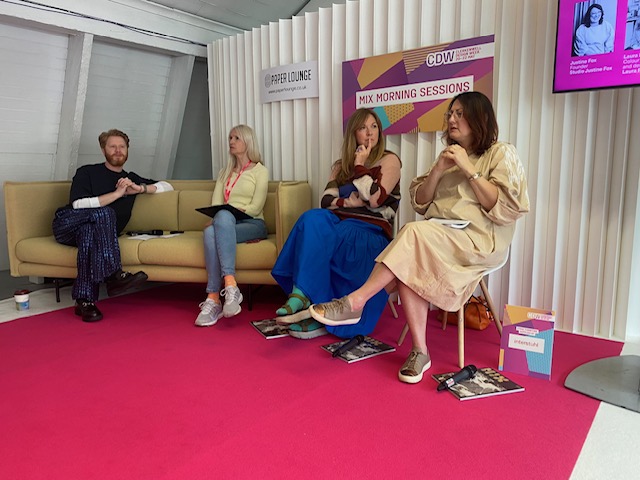
To close the panel, Harry McKinley, managing editor, MIX Interiors, asked the panel in three to five words to say ‘What’s next in colour, what’s the trend?’

Conversations at Clerkenwell

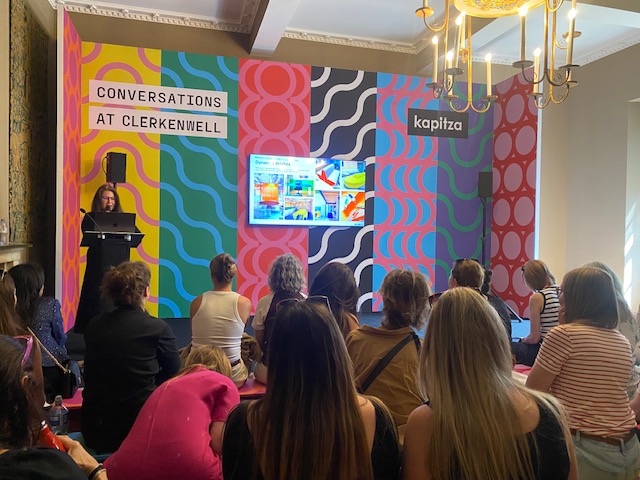
It was fascinating being at the session hosted by Alexi Cowan, head of interiors, WSGN, where they focused on colour for workspace aesthetics trends 2026-2030. They also highlighted three key trending topics, ‘Joy in colour’, ‘Power of Nostalgia’ and ‘Holistic wellbeing’.
Joy in colour

This is all about purposeful play, the importance for all ages to integrate play into their day, celebrating micro moments of play to spark joy and creativity, and to make sure that play aligns with your company values. In interiors this means making designs fun and functional, adding layers for depth, thinking about textures to enliven our senses, the agile use of furniture and design, for interiors and design to be a channel for self-expression, and to focus on personalisation. It’s a must to link colour to your collections and to also bring colour to functional pieces.

Power of nostalgia

Here the focus was on nostalgia; for example, to consider using faux products and finishes, to create cocoon like spaces, to use wood as a finish and colours that have an amber haze or cocoa powder feel. The was an invitation to think of brown as the new black, to consider metallic finishes and copper tones, to create luxe high-end finishes, and to embrace shape, silhouettes, colour and style, to combine modern with old, as a means to bring a nostalgic element to design – think cherry lacquer, dark berry tones with high gloss finishes to create a seductive, luxurious experience.

Holistic wellbeing

For me, the continued focus on wellbeing is a must – harmonious palettes, neutrals, tonality and external contrast, with a lean towards pink pigmented hues, less orange terracotta, colours that are warm, earthy, and resilient. Biophilic design will continue to be popular with interior living plants, spaces that have lots of amazing natural light and are relaxing airy spaces that have a high-end, quality finish.

On the wellbeing front, it was wonderful to participate in a ‘self-massage workshop’ hosted by Nordic Design House, plus to have lunch and catch up with Mags.

Until CDW 2026 – Thank you!

I appreciate this has been a bit of a whistle stop tour, but I hope I’ve sparked your curiosity about what’s possible with colour and what’s coming in the world of colour.

A huge thank you to everyone who made my #CDW2025 experience so colourful and expansive – Karen Haller, Justine Fox, Laura Perryman, Harry McKinley, Magdalena Tym, Michaela Reysenn, Catriona Hammett, Mary Sholl, Charlotte Raffo, Emma Freeman, Alexei Cowan, Jason Graham, Seetal Ladva, Domus Group, MIX Interiors, KAI Interiors, Nordic Design House, Hansgrohe, Colourhive, WGSN, Soundbox Store and many more.

Let’s work together

With over 20 years of experience working with innovative and disruptive-tech businesses across a variety of sectors – from HR-tech and digital to creative agencies and interior design, I bring a blend of commercial acumen and creative thinking to everything I do. I’m a strategic yet hands-on leader with a passion for collaboration and an action-oriented mindset that delivers real results.

My approach is human to human, balancing the analytical left brain (facts, figures, and data) with the intuitive creativity of the right brain (emotion, imagination, and storytelling) – because I believe the magic happens when you combine these two key ingredients.

Get in touch – I’d love to talk.

Header image: Snapped at Clerkenwell Design Week
What is colour to you?

What is colour to you?

Last week, I had the pleasure of meeting a woman who has inspired me for quite some time, the brilliant Judith Van Vliet. With a global career filled with creativity and colour, Judith is the founder of The Color Authority, and host of the podcast Let’s Talk Color, where she speaks with colour specialists from around the world about their work, passion, and the emotional and psychological power of colour.

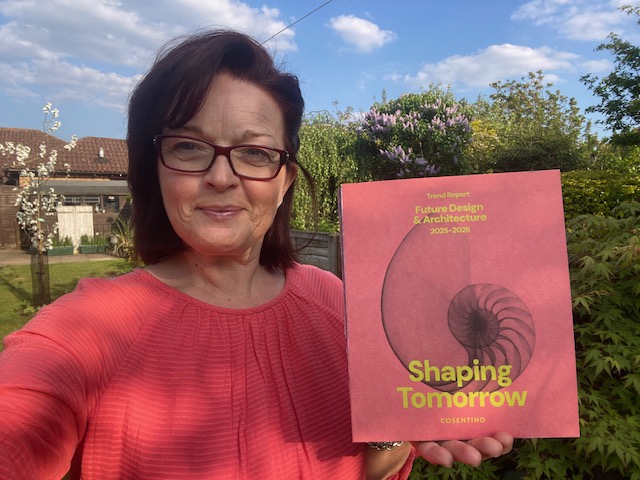
The event I attended featured Judith in conversation with Hamish Kilburn, discussing findings from the newly released trend report Shaping Tomorrow – Future Design & Architecture 2025–2026. Since that evening, I’ve been completely immersed in the book, soaking in the five key themes: Origin, Solace, Nature, Urban, and Wonder. Each one resonated deeply, and affirmed the powerful role colour plays in design, emotion, and identity.

Colourful conversations

One question Judith often asks her podcast guests really stayed with me: “What is colour to you?” While we chatted after the panel, we didn’t get to explore that question — so I’ve taken time to reflect:

  • Colour is life
  • Colour is energy
  • Colour influences how I feel and behave
  • Colour impacts how I connect — with myself and others
  • Colour is community, creativity, healing
  • Colour is the language my soul speaks

To me, colour is everything.

A huge thank you to Judith Van Vliet, Enric Pastor, Cosentino, and all who contributed to this collaborative and insightful vision for the future of design. It was a joy to meet so many inspiring individuals, including Pilar Rubio, Susie Hobbs, Sydney Davidson and others.

Colour, connection & creativity

My passion for colour runs deep, leading me to study applied behavioural colour psychology through two distinct lenses. From a branding perspective, I use my marketing expertise to harness the psychological impact of colour in shaping identity and perception. As an artist, I encourage others to explore their creativity through colour, connecting with their emotions and intuition in deeply personal ways.

Alongside my artistic and branding work, I’m also a certified NLP Practitioner, Creative Orientation Coach, and Intuitive Coach. I weave together these disciplines, along with my colour psychology training, to design unique and transformative coaching programmes and workshops. My superpower is helping others unlock their creative potential and embrace self-expression with confidence and clarity.

If you’ve ever felt the pull to be more creative but weren’t sure where to start, I warmly invite you to join me for one of my Colour & Creativity workshops. These sessions are a gentle, joyful space to reconnect with yourself, explore colour in a meaningful way, and express your creativity.

Now I’d love to hear from you:
What is colour to you and how do you embrace it in your life or business?

Let’s work together

With over 20 years of experience working with innovative and disruptive-tech businesses across a variety of sectors – from HR-tech and digital to creative agencies and interior design, I bring a blend of commercial acumen and creative thinking to everything I do. I’m a strategic yet hands-on leader with a passion for collaboration and an action-oriented mindset that delivers real results.

My approach is human to human, balancing the analytical left brain (facts, figures, and data) with the intuitive creativity of the right brain (emotion, imagination, and storytelling) – because I believe the magic happens when you combine these two key ingredients.

Get in touch – I’d love to talk.

Header image: Authors headshot.

The season of inspired play

The season of inspired play

As we step into a new season and quarter, April feels like the perfect time to embrace a fresh, creative mindset. Over the past few weeks and months, conversations with a couple of inspiring women have sparked the idea to develop two unique creative workshops. I’ve been intentionally seeking out collaborations with coaches, artists, practitioners, and specialists to co-create something new – blending my love for colour, creativity, and intuitive, conscious decision-making with our shared skills. The goal? To craft magical, memorable experiences that truly resonate on a human level.

Here’s a brief overview of the workshops to whet your appetite…

Conscious Creativity

  • Are you feeling stuck or creatively blocked?
  • Do you want to feel more connected to your body and your emotions?
  • Have you felt a craving for a playful, supportive, soulful experience?

Remembering the art of play and curiosity through creative embodiment, Conscious Creativity is a soul-nourishing workshop that invites you to explore creativity as a healing practice. Through colour, intuitive art, guided meditation, and somatic movement, you’ll reconnect to the wisdom within and find joy in self-expression – without judgment or pressure.

This isn’t your standard workshop and you can expect something a little different as you will experience a blend of grounding breathwork with gentle transformative somatic movement and intention setting, to creative expression through writing, colour and intuitive painting. A space to share, express, be seen and heard.

Hosted in Blossoms Wellness Centre, tucked away in the countryside village of Kilmington, Devon, the event will be hosted by me and Gemma Norris.

Gemma is a healing practitioner and is the founder member of The Infinity Health Hub. She has 16 years’ experience in Reiki, Myofascial Release, body work therapies and brings a grounded yet intuitive presence to her practice. Discover more about Gemma Norris here.

When does the workshop take place?

  • Sunday 4th May, 10:00 to 13:30, Blossoms Wellness Centre, Devon
  • Book now – Limited to 20 spaces

Colour & Creativity

  • Have you always wanted to do something creative but didn’t know where to begin?
  • Are you curious about playing with colour but afraid of “getting it wrong”?
  • Maybe you’ve looked into traditional art classes or workshops, but none of them truly struck a chord?

If you’ve nodded along to any of these, then our Colour & Creativity Workshop is made for you.

At the heart of Colour & Creativity is a shared passion for helping people reconnect with themselves. For me and Cesca, creativity is more than making something beautiful – it’s a form of mindfulness, a moment of meditation, and a way to ground yourself in the present moment. We believe colour and creativity can transform lives in small but meaningful ways.

Join us for an afternoon of colour and craft where you’ll be guided through the process of creating a beautiful crepe paper flower and gain an understanding of how to use colour.

Based in Surrey, South London, Cesca is a multidisciplinary artist with a background working as a display artist for Anthropologie, as well as working in TV and Film, her portfolio of work is extremely diverse. Discover more about Cesca Molly Flowers here.

When does the workshop take place?

• Saturday 31st May, 13:00-16:00, St. Mary’s Church, East Molesey, Surrey
Book now – Limited spaces available

Whether you’re looking to dip your toes into creativity, meet like-minded people, or simply spend a few hours being creative and more mindful, we invite you to join us. To find out more please drop me an email – emma@emmapotter.com

Curious to collaborate?

My passion for colour runs deep and it led me to study applied behavioural colour psychology through two distinct lenses. From a branding perspective, I apply my expertise in marketing to harness the psychological impact of colour in shaping brand identity and perception. As an artist, I inspire others to explore their creative expression through colour, encouraging them to connect with their emotions and intuition in a deeply personal way.

As a certified NLP Practitioner, Creative Orientation Coach, and Intuitive Coach, I blend my diverse skill set with applied behavioural colour psychology to create truly unique coaching experiences. My superpower lies in weaving these disciplines together into transformative coaching programmes and workshops, helping individuals unlock their creative potential and embrace self-expression with confidence.

Let’s work together

With over 20 years of experience working with innovative and disruptive-tech businesses across a variety of sectors—from HR-tech and digital to creative agencies and interior design—I bring a blend of commercial acumen and creative thinking to everything I do. I’m a strategic yet hands-on leader with a passion for collaboration and an action-oriented mindset that delivers real results.

My approach is human to human, balancing the analytical left brain (facts, figures, and data) with the intuitive creativity of the right brain (emotion, imagination, and storytelling)—because I believe the magic happens when you combine these two key ingredients.

Get in touch – I’d love to talk.

Header image – Author and artists own work.

Be creative in the attention economy

Be creative in the attention economy

Today is a colourful day – 21st March marks International Colour Day, an annual celebration that shines a spotlight on the important role colour plays in our lives, including art and design, science, psychology, to our everyday experiences. Founded by the International Colour Association (AIC) in 2009, the purpose of the day is to highlight the role colour plays in our emotions, culture, and human experience.

Colour captures our imagination, evokes emotions, inspires action and can drive behaviour change. When understood and used well, it is also a powerful tool for connection and engaging conversations. There’s no doubt about it, colour impacts our mood, can make us feel happy or sad, and it heavily influences decision making. From branding and marketing, to interior design and psychology – colour is a key driver of influence.

We live in the attention economy where everything is fighting for our attention. Are you being grey and hiding in plain sight like a battle ship on the ocean, or are you using colour to stand out and garner the attention you and your brand deserve?

Hidden in plain sight

From a business perspective, colour psychology is a powerful branding tool; it helps to communicate a brands identity, attract the right customer, build customer trust, and colour will help make a brand memorable and emotionally engaging for all the right reasons. With the wrong colours, the brand communication, cue and signal can send mixed messages. It is essential to know your brand personality, to understand your target audience, and to have knowledge of colours that are considered to reflect an industry or specific industry standard.

“Creativity is the power to connect the seemingly unconnected.” – William Plomer

Brand weaponry – the colourful kind

In celebration of International Colour Day 2025, I’d like to share some insights on the power of colour and the impact it has on our business, brand, and everyday lives. Let’s dive in…

Let’s change the rules

My love for colour—especially orange—has influenced many aspects of my life, from treasured gifts to personal purchases. From a brand perspective, FIAT’s bold decision to ban grey cars in favour of vibrant hues, as showcased in their Operation No Grey campaign, where a grey FIAT was dramatically dipped in orange paint, demonstrates and celebrates colour’s emotional power. In contrast, grey, the UK’s most popular car colour, is often associated with blending in, neutrality, and even emotional dullness. Historically linked to invisibility—whether in military uniforms or industrial aesthetics—grey has long dominated design, fashion, and interior design. However, perhaps the global shift towards embracing colour signals a collective desire for optimism and self-expression in the years ahead. As colour trends evolve, I hope this celebration of vibrant hues is here to stay.

“The purest and most thoughtful minds are those which love colour the most.” – John Ruskin

Don’t want to hide in plain sight. Read on and let’s talk.

Colour is emotion

As someone who has been fascinated by colour for over 30 years, I’m always eager to deepen my understanding—both for myself and my clients. Neuroaesthetics, the study of how art and design influence the brain, is more than just creating beautiful spaces; it’s about shaping emotions, behaviours, and experiences. Her I talk about the profound role colour plays in our lives—from influencing mood and metabolism to driving brand connections. Whether in branding, business, or interior design, understanding colour’s impact helps create meaningful, measurable results.

Thank you to Modulyss for shedding light on the power of colour in design during their Modulyss Talks session on ‘The Impact of Neuroaesthetics’, in discussion with Karen Haller.

“Colours, like features, follow the changes of the emotion.” – Pablo Picasso

Read on to explore some key takeaways from this insightful discussion.

Art and Neuroaesthetics: The science of creativity

A few months ago, I discovered the Art2Life podcast, where artist Nicholas Wilton interviewed Ivy Ross and Susan Magsamen about their book Your Brain on Art. Their discussion on neuroaesthetics—the science of how art impacts our brains, bodies, and behaviours—was truly fascinating. As sensory beings, we experience the world through sight, sound, touch, taste, and smell, and art has a profound ability to influence our emotions, thoughts, and connections. Creativity isn’t just an outlet; it rewires our brains, enhances well-being, and strengthens communities. From healing and mindfulness to problem-solving and innovation, the power of art extends far beyond aesthetics. This conversation reinforced how creativity can transform lives, workplaces, and even the way we engage with the world—something I explore in my own work.

“I found I could say things with colour and shapes that I couldn’t say any other way – things I had no words for.” – Georgia O’Keeffe

Let’s dive into the key takeaways and explore how art and creativity shape our experiences.

Brand and marketing

Growing a business comes with challenges—defining your brand, standing out in a crowded market, building lasting trust with your audience to name a few. Whether you’re struggling with inconsistent messaging, market differentiation, or outdated branding, I provide practical, actionable solutions that align your business with your audience and goals. Through a collaborative and strategic approach, we’ll refine your brand identity and unlock new opportunities for growth.

“Your brand is the single most important investment you can make in your business.” – Steve Jobs

Read on to discover how we can transform your brand’s potential.

The power of colour summit

Today marks the start of a three-day virtual event titled – The Power of Colour Summit – which invites people to explore the profound impact of colour on human consciousness, health, and well-being for a joyful life. It also showcases using colour in evolutionary ways to transform our health, relationships and the way we do business.

Speakers, thought leaders, innovators and experts include Tash Bradley, Director of Interior Design at Lick; Melissie Jolly, founder of Colour Mirrors; Reverend Dr. Bhante Saranapala, the Urban Buddhist Monk; Karen Haller, Applied Colour & Design Psychology Practitioner, Teacher and Mentor, and many more. Attendees will also have the opportunity to engage directly with experts during interactive Q&A sessions.

At the summit you can expect to explore how understanding colour can transform your life and your business, it really does have a profound impact on every area of our lives.

To register for the event and find out more visit their website.

Let’s work together

With over 20 years of experience working with innovative and disruptive-tech businesses across a variety of sectors—from HR-tech and digital to creative agencies and interior design—I bring a blend of commercial acumen and creative thinking to everything I do. I’m a strategic yet hands-on leader with a passion for collaboration and an action-oriented mindset that delivers real results.

My approach is human to human, balancing the analytical left brain (facts, figures, and data) with the intuitive creativity of the right brain (emotion, imagination, and storytelling)—because I believe the magic happens when you combine these two key ingredients.

Let’s continue to use the power of colour to build environments that encourage positive change and build brands and businesses that are a force for good.

“If you change the way you look at things, the things you look at change.” Wayne Dyer

Get in touch – I’d love to talk. Email me at emma@emmapotter.com.

Header image – Me snapped in the sunshine. 

Art & Neuroaesthetics: The Science of Creativity

Art & Neuroaesthetics: The Science of Creativity

A few months ago, I stumbled upon a fascinating podcast—Art2Life—where host Nicholas Wilton interviewed Ivy Ross and Susan Magsamen about their book Your Brain on Art. As someone passionate about creativity, intuition, and neuroscience, I was captivated by their discussion on neuro aesthetics—the scientific study of how art impacts our brains, bodies, and behaviours.

“Neuro aesthetics emerged in the late 1990s, and nobody is clear on who coined the term, but a simple definition is that neuro aesthetics is the study of how art measurably changes the body, brain, and behaviour and how this knowledge is translated into practice” – Susan Magsamen

The power of sensory experiences

As humans we are deeply sensory beings – through a relay of signals sent via our nerves to our brain, we have a nose to smell, eyes to see, ears to hear, skin to touch, and a mouth (tongue) to taste – all of which are essential for creating memorable, emotional experiences that influence and shape our lives. Our senses uniquely activate different parts of our brains. Art uniquely activates different brain regions, influencing how we think, feel, and connect.

Why creativity matters

Now, I’m absolutely not a neuroscientist, but I am extremely interested in how our brains work; what makes us tick; why creativity and art has the power to transport us to a completely different place, heal us, and find solutions to challenges in our lives; where we can go to join a global community of budding artists to share our love of all things creative; who we can connect with to fuel our passion, and ask when is the right time to start practicing the joy of art and being creative – which is of course, now.

Creativity is more than just an outlet—it’s a tool for problem-solving, self-expression, and emotional well-being.

“We are feeling creatures that think, not thinking creatures that feel.” – Ivy Ross

In ‘Your Brain on Art’, Ivy Ross (Chief Design Officer, Google Consumer Devices) and Susan Magsamen (Executive Director, International Arts + Mind Lab, Johns Hopkins University) explore how neuroaesthetics can revolutionise healing, strengthen communities, and restore our planet. Their discussion on Art2Life brought many of these ideas to life.

Key takeaways from the conversation:

  • Creativity rewires the brain – Our brains are constantly evolving, forming new neural pathways that influence all areas of life.
  • Daydreaming is productive – It’s where solutions emerge. Pay attention to your sensory experiences and how they shape your thoughts.
  • Art is healing – Just 20 minutes of daily creative activity can reduce stress, enhance well-being, and improve cognitive function.
  • Art connects us – Whether as creators or observers, art has the power to speak directly to our emotions, often beyond words.
  • Colour is energy – Each colour emits a different wavelength and frequency, impacting our emotions and perceptions in profound ways.
  • Art as meditation – Creativity requires presence, making it one of the highest forms of mindfulness.
  • Art extends life – Studies suggest people who engage in creative activities regularly live, on average, 10 years longer.

“The arts are some of the most salient experiences we have in our lives”. Ivy Ross

Building creativity & connection

Just as colour has the power to influence our emotions, art and being creative certainly has the power to enrich our lives, to build community and connection, bring us joy, encourages us to be more interested in the world around us, and I believe ultimately makes us more interesting and culturally aware people. Art makes us more aware, connected, and engaged with the world.

Creativity in the workplace

In the corporate world, there’s a growing demand for blending data-driven and intuitive thinking. More organisations are using creativity to unlock new ideas and fresh solutions. In my workshops, I coach leadership teams through experiential creative processes, helping them expand their perspectives and connect in new ways.

How has art influenced your life or business? How do you use creativity to inspire, connect, or problem-solve? I’d love to hear your thoughts. Drop me a comment or send me an email emma@emmapotter.com

Let’s work together

With over 20 years of experience working with innovative and disruptive-tech businesses across a variety of sectors—from HRtech and digital to customer experience and interior design—I bring a blend of commercial acumen and creative thinking to everything I do. I’m a strategic yet hands-on leader with a passion for collaboration and an action-oriented mindset that delivers real results.

My approach is human to human, balancing the analytical left brain (facts, figures, and data) with the intuitive creativity of the right brain (emotion, imagination, and storytelling)—because I believe the magic happens when you combine these two key ingredients.

I’m especially passionate about growth, coaching, and the power of applied behavioural colour psychology. Get in touch to create something exceptional together!

Header image – a piece of bespoke abstract art I created for a private client, based on their colour personality following a 121-colour consultation.