
Last week I had the pleasure of attending Mad//Fest London, a three-day marketing conference held at the Truman Brewery, East London. In fact, it’s held in the Truman Brewery car park which sounds a bit random, but it’s excellently organised and hosts some incredibly inspiring talks and brand challenges, especially on the brand innovation stage. The event is packed with hundreds of industry people and it’s a fantastic place to network, make new friends, be inspired by the range of speakers talking about some of the latest marketing trends and tech. Plus for me, provided a brilliant opportunity to catch up with lovely ex-colleagues and consultants that I’ve had the pleasure of working with over the past 20 years.
A fabulous, fast paced format, the brand innovation stage is where a household, global brand, in this instance Taco Bell will come to the stage with a real-life challenge and six providers will individually come to the podium to present their solution. It’s a bit like a quick-fire pitch ‘speed dating’ session where each provider has five mins to pitch their creative concept to address the challenge. At the end of the session, feedback on each concept is shared and a winner appointed. A truly educational and interactive session that spurs the imagination and puts a spotlight on innovation.
Due to client commitments I decided to attend day three, specifically to hear a Masterclass hosted by Rory Sutherland titled ‘Borderless creativity – is messy and that’s the way we like it’. For those that don’t know, Rory is the Vice Chairman of Ogilvy UK and founder of the behavioural science practice, he’s also a prolific writer, presenter and industry advisor. In the Masterclass he talked about magic, rational idea versus creative idea generation, and the need for a leap of faith.
Here are some nuggets and insights that caught my attention…
Get comfortable with being uncomfortable
We all have the ability to be creative in every decision we make. Yet to be fully creative we need to acknowledge that there will be a period of messiness, a period where you don’t really know what’s going on and you don’t really know what’s going to result. But if we try to bypass this messy, disordered stage because it’s uncomfortable and causes tension, we miss the delight and surprise of the journey, and learnings from the process. In essence, to be creative we need to be comfortable with being uncomfortable. We need to learn to hang with the tension and let the creative process flow.

Hidden gems – discover the outlier
During the creative process we may discover the findings or product that initially result are not what’s expected, and may not initially be considered a success, in fact they may fail and be considered a failure. Yet looking at a perceived failure with fresh pair of eyes and a fresh perspective may deliver different results. Shift your perception, look again, what can be perceived differently?
The example Rory gave here was about Night Nurse. Initially deemed as a failure because it made people feel sleepy if they took it during the day, it was then viewed differently with a fresh perspective, and pitched as a night time product to provide relief from cold symptoms and to help induce a restful and healing night’s sleep – thereafter the product was deemed a resounding success.
The accidental discovery of Viagra was another example of adopting a fresh perspective on a product. ‘The Genius of Accidents’ if you’re curious to hear more about the Viagra story, have a listen here.
Challenge accepted wisdom
Gathering and analysing customer data is a critical part of understanding how your consumers behave, including what, when and where they purchase, however, it’s also important to remember that this data is captured in the past. Data most certainly has its place in telling a story and provides critical insight, especially when taken from multiple sources to build up an inclusive picture, but formulas don’t create magic in the same way the creativity process does. Rory states, “Rational decision making does not guarantee results, it’s not that formulaic”. I agree with this sentiment, as human beings we are constantly evolving, constantly changing, we don’t remain still, we are always seeking new experiences, new ways. He goes on to say “Averages are the enemy of the marketer. Look at the outlier data.”

As brand strategists and marketers, we understand the importance of data, yet we need to make space for magic. Robust decision making must involve some creativity, messiness and randomness. I appreciate using the word ‘randomness’ may be challenging as more often than not as people, and as business leaders, we want ‘certainty’ in our decision making, but certainty is an illusion.
We can only reason forwards when we have multiple data sets to review, but we need to remember that we can’t change the past, and you can’t make fully informed decisions based on the past. However, too reason backwards involves an act of imagination, to imagine different scenarios. This is subjective behaviour where you imagine different scenarios and what possible decisions brought you to this scenario. We don’t always know enough, so there has to be space for imagination and a leap of faith.
I believe, to find magic we need to tap into our inner wisdom. To step away from our head brain and into our heart brain, it’s our heart brain that’s creative and creates solutions.
Explore and exploit – the waggle dance
I’m sure many, if not all readers, are familiar with the 80/20 rule. Known as the Pareto Principle, this phenomenon was discovered by Italian economist and sociologist Vilferdo Pareto, and states that 80% of our results come from 20% of our efforts. He also noticed that 20% of plants were bearing the most fruit.
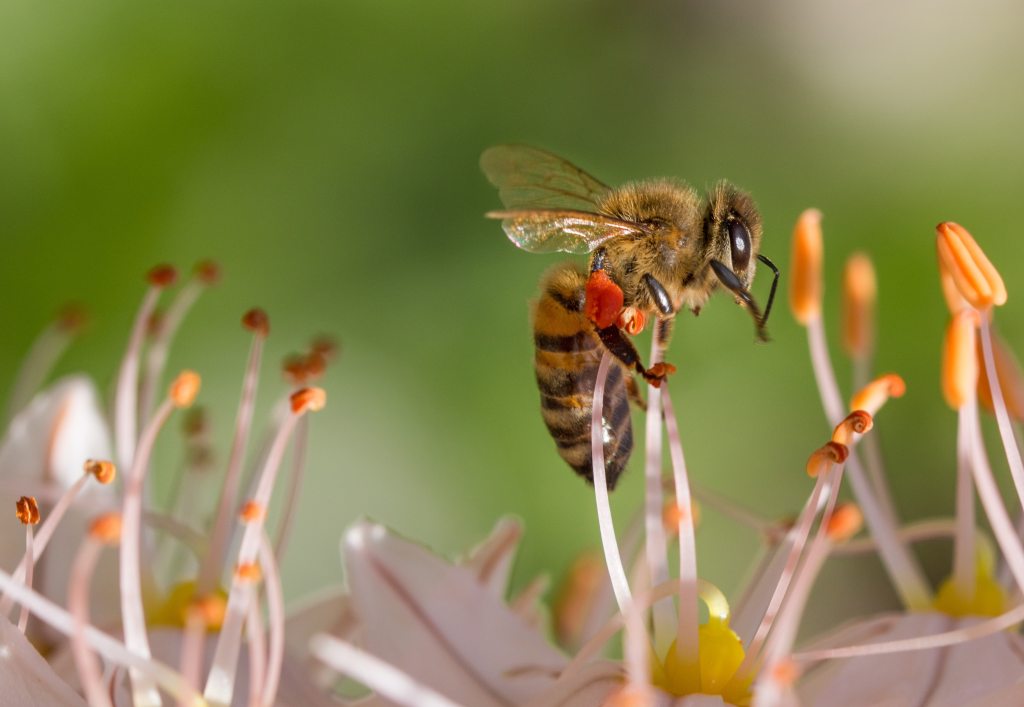
Interestingly bees do something called a waggle dance, where the worker communicates the distance, quality and nectar-rich flower patch to her fellow bees. Yet it’s been said that 20% of the bees ignore this communication and get creative, doing their own thing, and go off piste. What’s important to note here is that without the insight provided by this seemingly random behaviour of 20% of the bees, the hive would not survive.
From a business and marketing perspective, we need to spend 80% of our marketing budget to exploit what we already know and 20% to explore. How do you allocate spend to make space for magic?
As Rory commented, “Start with psychology and behaviour, not economics”. And as I would add, “Start with nature, it always has the answer”.
Do something different – discovery of the new
On occasion throughout my career when presenting or talking about new or creative ideas, I’ve been told ‘that’s not how we do things here’ which makes we want to ask the question “How’s that working out for you?”. But most people are not prepared for such a direct response or question, particularly in challenging times. What they often fail to see is that the orientation of this question comes from a place of wanting to succeed, of wanting to explore and exploit, a desire to make space for magic – not simply accept the status quo.
I liken the Pareto Principle and the Waggle Dance to 80% of people that follow the rules and 20% of people that are considered renegades or difficult (I prefer tenacious and curious) because they don’t blindly do what they are told; they opt to challenge the norm, to challenge authority and what’s gone before.
Taking a conscious approach, what’s good to know is that to succeed we need both parties – the rule followers and the rule breakers. But we must acknowledge that success is driven by the 20%. Are you one of the creatives, the renegades, one of the people who create magic and alchemy?
Let’s talk – colourful conversations
Are you facing a challenge? Do you sense you would benefit from taking a different approach? What perspectives have you adopted so far?
I’m a brand strategist, colour consultant and a coach, with over 20 years brand, marketing and communications experience. I work with heart-led people and business who are looking to make a positive impact in the world. Do get in touch to talk about and explore new perspectives.
With joy and colour,
Emma 🧡
Images courtesy of Alexander Ant, Meruyert Gonullu, Pixabay and Igor Kamelev.
 Brand Strategist | MarComms | Coach